The Words on a Coffee Bag That Mean Nothing
Premium. Gourmet. 100% Arabica. Barista Blend. Which words on a coffee bag are regulated, which are pure decoration, and the three that actually tell you something.
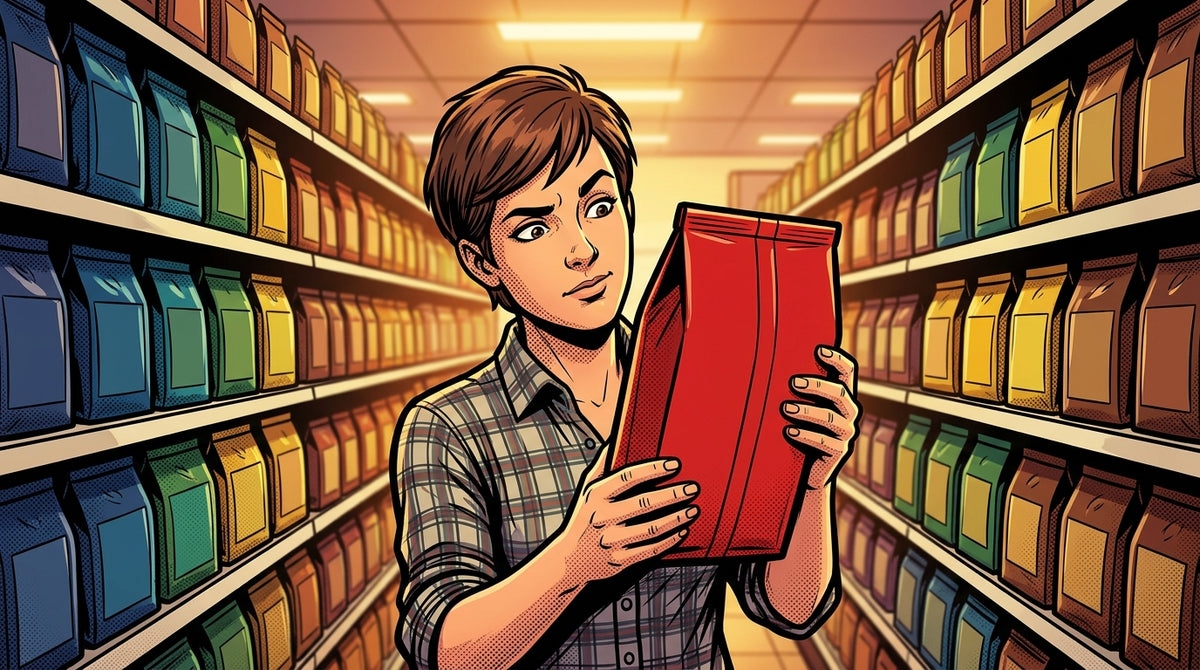
The front of a coffee bag is advertising. The back of it is information. Most people buy off the front.
That is not a dig at anyone. The front is designed to be read in two seconds in a supermarket aisle, and it is very good at its job. The problem is that a lot of what is written there sounds like a quality claim while meaning absolutely nothing at all.
Here are the words to stop paying for, and the ones actually worth something.
Premium. Gourmet. Artisan. Handcrafted.
None of these are regulated. None of them have a definition. There is no board that checks whether your coffee earned the word artisan before you printed it.
Anyone can put them on anything. A factory roasting forty tonnes a week can print handcrafted and nobody can stop them. If those words are the strongest claim on a bag, the bag has told you nothing.

100% Arabica
This one is the cleverest, because it sounds technical.
There are two coffee species you will meet. Arabica and Robusta. Arabica tastes better and is grown higher. Robusta is hardier, cheaper, and carries roughly double the caffeine, which is why it turns up in instant coffee and in a lot of supermarket blends.
So 100% Arabica does mean something. It just means almost nothing in the place you are reading it, because essentially every specialty bag and every decent cafe is already 100% Arabica. It is the baseline, not the achievement.
It is the coffee equivalent of a restaurant advertising that the kitchen is clean. Good. That was expected.
Barista Blend. Barista Grade. Cafe Style.
No barista signed off on this. There is no grade.
What these usually mean in practice is that the coffee is roasted darker, because darker is more forgiving and tastes closer to what people expect from a cafe. That is a legitimate choice. It is just not a qualification.
Freshly roasted, with no date anywhere
Freshly roasted is a claim about time that refuses to tell you the time.
If a roaster is proud of how fresh the coffee is, they print the day it was roasted. If the only date on the bag is a best before twelve months out, the word freshly is doing a lot of unpaid work. We went into why that matters, and what it costs you, in Why Coffee Got Expensive.

Now the words that are actually worth reading
The roast level. Light, medium or dark, often shown as a little scale of dots. This is the single most useful thing on the bag, because it tells you more about how the cup will taste than the country does. We wrote the full version of that argument in Dark Roast vs Light Roast.
The process. Washed, natural or honey. This is how the fruit came off the seed, and it changes the flavour more than most people expect. The whole journey is in Where Your Coffee Actually Comes From.
A roast date. Covered above. It is the one number that decides how your cup tastes.
Who roasted it and where. A real name and a real address means someone is accountable for what is in the bag. A brand with no roastery behind it is a label on somebody else's coffee.

What we put on ours
We roast three signature blends, and we tell you what each one is actually for rather than dressing it in adjectives.
People Everyday is the flagship and the one most people start with. Coco pops and vanilla milkshakes, built for milk drinks and for mornings that need to be easy.
No Sleep Till Brooklyn is the medium dark. More punch without going all the way to the dark side. Jaffa cakes dipped in a dark chocolate thickshake.
Hyperdrive is the darkest we make. Maltesers melting in dark chocolate. It is the blend that turned a lot of light roast loyalists into dark roast believers.
All three sit together in the blends collection, and every bag carries a roast date, because we roast weekly and deliver weekly. That is the whole reason we are comfortable printing it.
The short version
Ignore the adjectives. Find the roast date, the roast level and a real roaster's name. If a bag leads with premium and 100% Arabica and will not tell you when it was roasted, that is not a premium coffee. That is a bag hoping you only read the front.
Written by Jos at Brother of Mine, specialty coffee roasters in Perth.
Keep reading
More from Ground Level.


