Why Coffee Got Expensive (And Why It Is Worth Paying For)
Arabica hit a 47-year high and has not gone back to normal. What actually happened, what you are paying for, and why the cheap bag has a cost that is not yours.
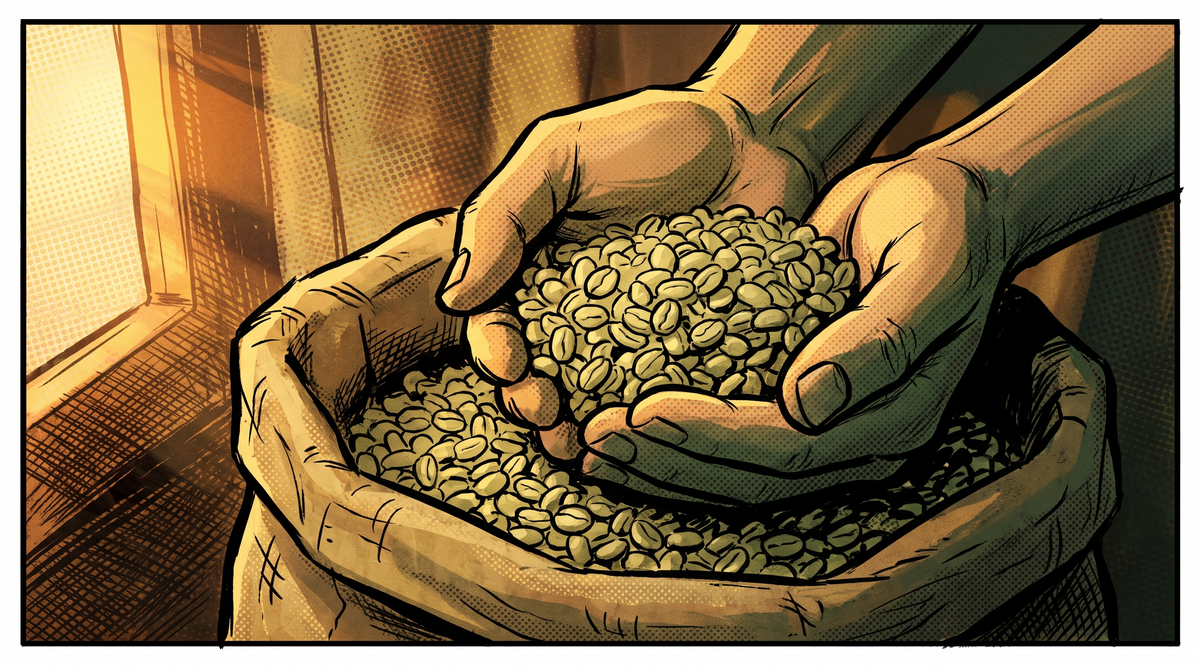
Your Cafe Did Not Get Greedy
If your flat white went up 50 cents this year, the cafe is not the reason. Neither are we. The price of green coffee did something in the last two years that it had not done in almost half a century.
Most people never see this part, because coffee arrives in your life as a warm cup or a bag on a shelf. The bit in between is a global commodity market, and it has been on a rollercoaster.
Here is what actually happened, with real numbers, because we think you should be able to see the working.
What Actually Happened
Coffee trades on a global benchmark called the C-market, priced in US cents per pound. For years it drifted along somewhere near a dollar fifty.
Then Brazil, which grows roughly a third of the world's coffee, had the worst drought in its recorded history, with something like 110,000 wildfires burning through growing regions. Vietnam, the biggest robusta producer, lost about 20% of its crop to drought in the same stretch. Between them those two countries account for close to half the coffee on earth.
Supply fell, stockpiles emptied, and the price went vertical. Arabica hit an all-time record of about US$4.40 per pound in February 2025. That is a 47-year high. Coffee had never been more expensive in the working lifetime of almost everyone in this industry.
| Arabica on the C-market | |
|---|---|
| Long-run typical | Around US$1.50/lb |
| All-time record, Feb 2025 | About US$4.40/lb |
| Low point, June 2026 | About US$2.39/lb |
| 7 August 2026 | About US$3.06/lb |

It Has Not Gone Back to Normal
You may have read that coffee prices crashed this year. Half true.
Arabica did fall hard from the record, all the way down to about $2.39 a pound in June. Then it rallied through July on worries about the Brazilian harvest, and new United States tariffs on Brazilian coffee landed on top, which shove demand around the world and move the price for everyone.
As we write this, on 7 August 2026, it is sitting near $3.06. That is well off the peak, still roughly double the old normal, and still higher than the same week last year. The forecasts have it back near $3.40 by the end of this quarter.
Here is the number that tells the real story though. The certified arabica stockpile, the buffer the whole market draws on when supply gets tight, has fallen to about 251,000 bags. A year ago it held about 754,000. Two thirds of the cushion is gone.
And this is the strange part. Brazil is expected to bring in a record harvest this season, more than 70 million bags. Plenty of coffee, in other words. But heavy rain through Minas Gerais and Sao Paulo in June and July may have knocked the quality of a chunk of it, and growers are selling slowly rather than dumping it on the market. So there is lots of coffee and still not much good coffee, which is the part that matters if you care how your cup tastes.
The forward risk is a developing El Nino, which threatens the flowering that sets next year's crop.
The real story is not that coffee got expensive once. It is that coffee got unpredictable, and unpredictable is harder to buy for than expensive.

Why That Reaches Your Cup Slowly
Green coffee is bought months ahead. When we commit to a coffee, we are buying against a harvest that has already happened and a shipment that takes weeks to arrive.
That lag is why cafe prices did not spike the week the market did, and why they do not drop the week it falls back. Anyone still drinking through beans they contracted last year is drinking last year's price. When that runs out, the new number arrives all at once.
It is also why a roaster who never moves their price is not being generous. They are either wearing it, which is temporary, or they have quietly changed what is in the bag.
Your Cafe Is Wearing Most of It
Here is the part we think people should actually know, and it is the reason we are writing this at all.
Our own green bill is up about 55%. That is what we pay for raw coffee before we have turned the roaster on, paid a wage, printed a bag or put a van on the road.
Now look at what happened at the counter. Across Australia the average cup went from about $4.00 before the pandemic to about $5.50 now. That is a rise of roughly 37%. A flat white in Perth sits around $6.50.
Green up 55%. Cup up 37%. And green is only one line on a cafe's bill, alongside milk, wages, rent, power, freight and fuel, most of which also went up.
So where did the difference go? Into the operator. Cafe profit margins across the sector have fallen from about 3.5% to about 2.5%. The Australian Restaurant and Cafe Association says many venues are holding prices down despite rising costs, because competition is fierce and everyone is nervous.
Read that margin number again. On a $6.50 flat white, 2.5% is about 16 cents. That is what is left for the person who opened at 5am, trained the staff, paid the rent and made your coffee.
That squeeze does not stay invisible forever. It comes out somewhere. Shorter hours. A cheaper bean. Fewer staff on at 8am. A venue that quietly closes and everyone says they did not see it coming.
What We Pay Versus What the World Pays
Australians think they are being gouged on coffee. We have just been to the States, and we are not.
Over there a regular milk coffee runs about US$8. A good one at a proper specialty roaster was over US$10. Blue Bottle lists its espresso drinks around US$8 to US$9.
Convert it and it gets ugly. At the Reserve Bank rate this week, one US dollar is about A$1.42.
| Where | Local price | In our money |
|---|---|---|
| US, everyday milk coffee | US$8 | About $11.35 |
| US, good specialty cup | US$10+ | About $14.20 |
| UK high street chain | About £4.25 to £4.50 | About $8.20 to $8.70 |
| UK, large flat white | About £5.19 | About $10.00 |
| Perth flat white | $6.50 | $6.50 |
Read the UK line again, because that is the one that should stop you. Those are chains. Caffe Nero, Costa, the ones you queue at in an airport. Not a small roaster who cares. Their standard flat white converts to more than eight dollars, and a large one lands near ten.
Now look where we are. Perth is about as far from a coffee farm as it is physically possible to get. Every bean in your cup crossed an ocean, cleared customs and got trucked across a very large country. We pay some of the highest hospitality wages in the world. Add fuel, freight, power and rent, all of which climbed.
And a flat white here is $6.50, made by someone who probably knows your name.
That is not a rip-off. That is a sector running on fumes and hoping you do not notice.
It Has Hit the Shelf Too
The cup is only half of it. The bag moved as well, and that one is easier to see because the number is printed right on it.
Not long ago a kilo of specialty from a decent Australian roaster sat around the $50 mark. We have watched that climb steadily, and over east you will now find specialty house blends pushing $80 a kilo. Ours is $65, which puts us somewhere in the middle, and we would rather tell you that than have you find out by comparing tabs.
Same pressure, same causes. When green goes up 55%, it does not politely stop at the cafe door.
The Cheap Bag Has a Cost. It Is Just Not Yours.
Coffee can always be made cheaper. That is the uncomfortable part.
You can buy a lower grade with more defects. You can buy older crop that has lost its sweetness. You can roast it darker to hide both, which is a very old trick and it works. You can blend in more robusta, which yields more and costs less. None of that is illegal or even unusual, and none of it will be printed on the front of the bag.
There is one tell that cuts through all of it, and it is the easiest thing in the world to check. Look for a roast date.
Good coffee carries the day it was roasted, because the roaster is proud of how fresh it is. Supermarket coffee almost never does. You will find a best before date instead, often 12 or 18 months out, which tells you nothing except that it will not make you sick. Coffee does not go off. It goes flat. Most of what is on a supermarket shelf was roasted months ago and has been quietly fading ever since.
No roast date is not a small omission. It is the answer to the question you were about to ask.
And at the far end of the chain, when the retail price never moves, the squeeze lands on the grower. Coffee is farmed largely by smallholders. When the price they receive does not cover what it costs them to grow it, they do not write a press release. They switch to another crop, or their kids do not take over the farm.
That is the actual bill for cheap coffee. You just are not the one who gets handed it.

What It Costs You at Home
Here is the bit that surprises people. Good coffee at home is still the cheapest good thing you will buy all week.
| What you buy | Cups | Per cup |
|---|---|---|
| 250g bag at $20 | About 12 | About $1.60 |
| 1kg bag at $65 | About 50 | About $1.30 |
| Bought out | 1 | $5 to $6 |
Based on a 20g dose, which is a standard double. Grind it yourself and the gap gets wider, because whole beans keep for weeks and ground coffee starts fading in days.
Two honest caveats, because that table flatters home brewing.
You have to buy the kit first. A decent grinder is the one that actually matters and it is not cheap, and a bag of beans through a bad grinder is money set on fire. And you have to learn. Your first month of home espresso will be worse than your cafe, probably a lot worse, and some people never enjoy the fiddling.
Even counting all that, over a year it still comes out cheaper. But cheaper is not the same as better, and it is definitely not the same as instead.
This is not an argument for skipping your local. It is the opposite.
At 2.5% margin, your cafe is not the one getting rich off your morning. Someone opened at 5am, dialled the grinder in before you arrived, learned to steam milk properly, paid a barista, and washed the cup. On a $6.50 flat white they keep about 16 cents. You cannot make what a good cafe makes at home, and the ones doing it properly right now are doing it on almost nothing.
Brew at home on a Tuesday because you like it. Go to your local because they are good and because they are hanging on. Both things are true at once.
Our Take
Next time a price goes up, think twice before you decide someone got greedy.
Green is up about 55% for us. The cup went up about 37%. Cafe margins fell from 3.5% to 2.5%. Nobody in that chain is winning. The grower is not, the roaster is not, and the operator handing you the cup is on 16 cents.
So do two things. Check for a roast date, because that one detail separates coffee somebody cared about from coffee that has been sitting in a warehouse since autumn. And when the coffee is genuinely good, pay for it without the sigh. It is still, by a distance, the cheapest good thing in your week.
We are not going to pretend prices have not moved, because you would notice and we would look silly. What we will not do is quietly drop the grade and hope nobody tastes it. The whole point of a small roastery is that there is a person at the end of the chain you can actually ask.
Want to taste the difference?
Shop our signature blends, roasted in Perth and ground to order. Or check the full brew guide to get more out of every bag.
Keep Reading
- Where Your Coffee Actually Comes From. The journey before the bag.
- What Single Origin Actually Means. And when it does not matter.
- How to Store Coffee So It Actually Stays Fresh. Stop wasting what you paid for.
- Brew Guide. Our full brewing reference for every method.
Written by Jos at Brother of Mine, specialty coffee roasters in Perth.
Keep reading
More from Ground Level.


