Why Cafe Coffee Tastes Thicker Than Yours at Home
A lot of cafes don't pull a standard double for a small milk coffee. They pull a shorter, more concentrated shot. What a ristretto is, how to pull one at home, and it costs you nothing.
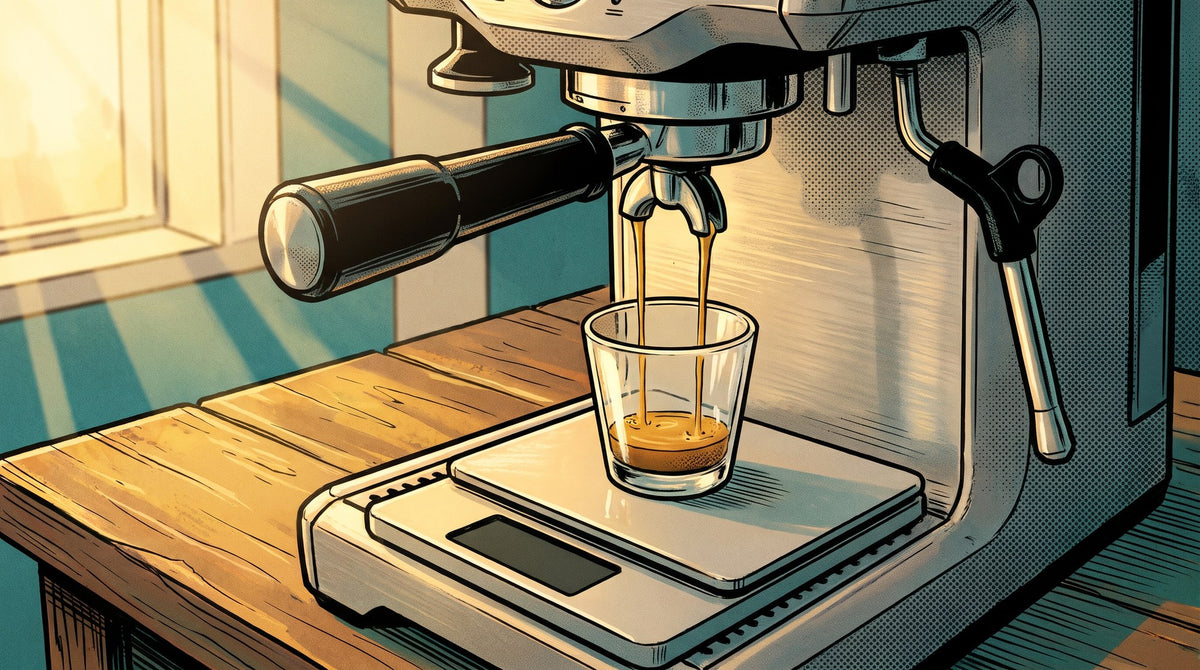
Your flat white at home tastes fine. The one at your local tastes thicker and sweeter, and it hits harder for the same amount of milk. A big part of that gap comes down to about 6 to 10 grams of coffee you're pouring into the cup and they aren't.
A lot of specialty cafes in Australia don't pull a standard double for a small milk coffee. They pull a double ristretto.
Same coffee in the basket, less water through it, a shorter and more concentrated shot. Most recipes online, ours included, start you on a longer one, so plenty of people at home never try it.
If your milk is the problem, we've covered that, and it's worth fixing first. This is the other half.
You've got good beans, your milk is silky, and your coffee still tastes a bit thin next to the cafe's. Here's the fix, and it costs you nothing.

What a Ristretto Actually Is
Ristretto is Italian for restricted, and that's all it means. You restrict the water.
Take our People Everyday recipe. The brew guide says 20 g of ground coffee in and 40 g of liquid out.
That's a 1:2 ratio. A ristretto is usually closer to 1:1.5, so the same 20 g in and about 30 g out.
The coffee in the basket didn't change. You just left out the last part of the shot, and that last part is the thin bit.
Watch the stream next time you pull one. It starts dark, turns honey-coloured, then goes pale towards the end. By then the water has already taken most of the good stuff, so it's adding more volume than flavour.
Think about a tea bag you've squeezed one time too many. Stopping earlier keeps the thick, sweet part of the shot and doesn't dilute it with the tail.
That's why it stands up to milk. A flat white cup holds 150 to 180 mL, and the milk dilutes whatever you gave it. Give it a more concentrated shot and the coffee punches through.
| People Everyday | In | Out | Ratio | How it drinks |
|---|---|---|---|---|
| Brew guide recipe | 20 g | 40 g | 1:2 | Balanced, easier to dial in, drinks well black |
| The cafe move | 20 g | 30 to 34 g | about 1:1.5 to 1:1.7 | Thicker and sweeter, built for milk |

How to Pull a Shorter Shot at Home
You need a scale under the cup. If you haven't got one, it's the $30 fix anyway. Then change two things, in this order.
1. Keep the dose and the water temperature. Stop the shot earlier. 20 g in, 93°C, and stop at 34 g.
Don't jump straight to 30. Taste it in your normal milk.
2. Go a touch finer so the time stays about the same. This is the step people skip. If you just stop your normal shot early, it'll finish in about 20 seconds and taste sour, because you've cut the time as well as the water.
Move the grinder one small step finer and aim for the same 27 to 30 seconds. The shot flows slower, and the water still gets time to do its job.
3. Then walk it down. Try 32 g tomorrow, then 30 g the day after.
Stop where you like it. Taste gets the final call, not the number.
| What you taste | What to do |
|---|---|
| Sour and sharp, even through milk | Shot's too short for that grind. Go a touch finer, or let 2 or 3 more grams through. |
| Sour and bitter at the same time | Don't touch the grind. That's channelling, so even out your puck. |
| Bitter and dry | You've gone too fine and the shot's crawling. Back off one step. |
| Thick, sweet, coffee comes through the milk | Stop. Write that down. That's your recipe. |
If you've never worked through a shot this way, start with How to Dial In Espresso. Get the 40 g shot right first, then come back and shorten it.

Why Not Every Blend Needs This
Here's something you only see from the roastery side. Our recipes already get shorter as the roast gets darker.
| Blend | Roast | In | Out | Ratio |
|---|---|---|---|---|
| People Everyday | Medium | 20 g | 40 g | 1:2 |
| No Sleep Till Brooklyn | Medium-dark | 19.5 g | 37 g | 1:1.9 |
| Hyperdrive | Dark | 19 g | 34 g | 1:1.8 |
Darker roasts give up their flavour faster. The heat of the roast has already broken the bean down more, so the water doesn't have to work as hard. Pull Hyperdrive long and you go straight into the bitter end.
That's why its recipe already stops at 34 g, and why we'd try the shorter shot on People Everyday first. There's the most to gain and the least risk.
Two more honest notes. A shorter shot doesn't mean more caffeine. It tastes stronger because it's more concentrated, and the caffeine maths is a different story.
And if you drink your coffee black, stay on the full recipe. This move is built for milk. On its own a shot reads differently, and the longer one is usually the better drink.
The BOM Take
The gap between your flat white and the cafe's isn't a fancier machine. Most of it is milk, and a good slice of what's left is 6 to 10 grams of the thin end of the shot. Same beans, same dose, one step finer, stop earlier.
Try it tomorrow. It won't cost you a cent.
Keep reading: Flat White vs Latte vs Cappuccino · How to Steam Milk at Home · How to Dial In Espresso at Home · The Brew Guide
Want to try the shorter shot? Start with People Everyday, a medium roast that's great with milk, or pick a blend.
Next Monday, 7am: how to make coffee for a crowd without missing the party.
Written by Jos at Brother of Mine, specialty coffee roasters in Perth.
Keep reading
More from Ground Level.