Flat White vs Latte vs Cappuccino: What's Different
A flat white, a latte and a cappuccino are the same coffee. What changes is the size of the cup and how much foam sits on top. Here is the straight answer, and which one to order.
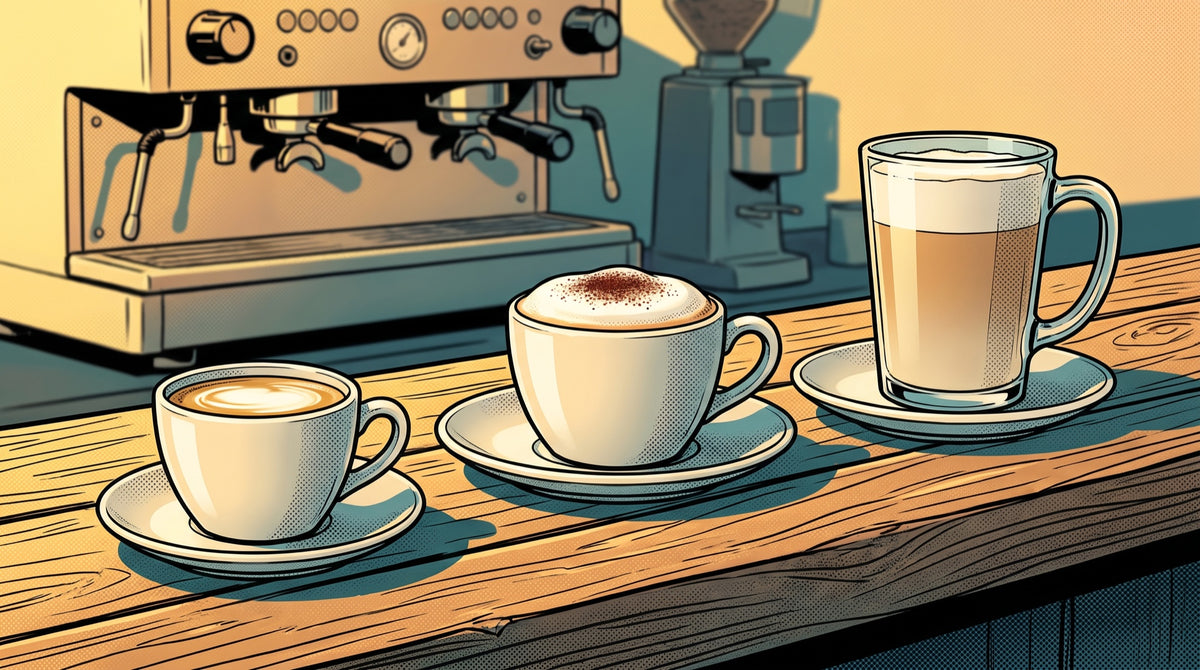
Here is something nobody behind the counter says out loud. A flat white, a latte and a cappuccino are the same coffee. Same two shots. Same milk out of the same fridge. Some mornings, the same jug.
So the whole flat white vs latte vs cappuccino question comes down to two things. The size of the cup, and how much foam sits on top. That's it. Everything else is the name on the board.
Plenty of people have ordered the same drink for ten years without being sure what makes it different from the one next to it on the menu. That isn't a dumb question. It's a fair one, and cafes don't make it easy, because the names drift from suburb to suburb. Here is the straight answer.

Flat White vs Latte vs Cappuccino: Same Shot, Different Cup
All three start with a double shot of espresso. In a lot of Australian specialty cafes that double is pulled a little shorter than a standard shot, which is part of why cafe coffee tastes thick and sweet. Then milk goes on top. How much milk, and how much of it is foam, is the only thing that changes.
These numbers are straight from our brew guide.
| Drink | Cup | Foam on top | How it drinks |
|---|---|---|---|
| Flat white | 150 to 180 mL | A thin layer, about 5 mm | Silky, and the coffee punches through the milk |
| Cappuccino | 180 to 200 mL | About 1 to 2 cm | Soft and velvety on top, usually a dusting of chocolate |
| Latte | 220 to 280 mL, cup or glass | Thinner again | The milkiest and mildest of the three |
| Magic | A small 150 mL cup | None, just silky milk | The strongest, served a little cooler so you can drink it straight away |
Think of two heaped spoons of Milo. Stir them into a small mug and you get something rich and chocolatey. Stir the same two spoons into a big mug and it's lighter and milkier. Nothing about the Milo changed. That is a flat white next to a latte.
The cappuccino sits in between, and the foam is why. Foam is mostly air. A cap with two centimetres of it on top holds less liquid milk than its cup size suggests, so it drinks stronger than a latte and softer than a flat white.
One more thing the cup size settles. Because all three get the same double shot, they carry the same caffeine. A latte isn't weaker in that sense. It just tastes milder. There is more on that in Caffeine, Honestly.

What Actually Happens on the Bench
Foam doesn't come from a different kind of milk. It comes from how much air goes into the jug in the first few seconds of steaming. A little more air for a cap. A little less for a flat white. Barely any for a magic.
On a busy morning, a barista with a flat white and a cap on the same docket will often steam one jug for both, then pour so the foamier milk ends up in the cap. Nobody is cutting corners. It's just how a good bench keeps up with a queue out the door.
It's also why the same order tastes different from one cafe to the next. One cafe's flat white is another cafe's small latte. Cup sizes vary, and so does how each barista likes to stretch the milk. Neither of them is wrong. If you have found a cafe that makes yours the way you like it, that is the whole game.
The milk itself matters too. If the drink tastes flat or a bit boiled, the milk was probably too hot. We cover temperature and texture properly in How to Steam Milk at Home, so we won't repeat it here.

Which Milk Coffee Should You Order?
You want to taste the coffee through the milk. Flat white. It's the smallest of the three, so the coffee leads.
You like a soft, foamy top. Cappuccino. Ask for the chocolate if they don't offer it.
You're new to coffee, or you want something big and gentle. Latte. It's a great place to start, and there is no shame in staying there.
You want it strong and ready to drink now. Magic. A double ristretto, which is a shorter, more concentrated shot, with silky milk in a small cup. Not every cafe has it on the board. Plenty will make one if you ask.
Piccolo, macchiato, cortado. These are the names that change the most between cafes. A piccolo in one place can be a different drink two streets over. Just ask what theirs is. Nobody worth their spot behind the machine will mind.
Making them at home? You only need one shot recipe. Our People Everyday espresso is 20 g in, 40 g out, in 27 to 30 seconds. Pull that, then change the cup and the amount of air you put into the milk. Small cup and a thin layer for a flat white. A bigger cup and a deeper layer for a cap. If you want it stronger with milk, try No Sleep Till Brooklyn or Hyperdrive. Dialling the shot in first is covered in How to Dial In Espresso at Home.
The BOM Take
Order what you like. The menu board isn't a test, and nobody behind the counter is marking you.
The only wrong coffee is the one you drink because you were too embarrassed to ask for the one you actually wanted.
Keep reading: How to Steam Milk at Home · How to Dial In Espresso at Home · Caffeine, Honestly · The Brew Guide
Want to taste what we're talking about? Check out our blends and we'll keep you sorted.
Written by Jos at Brother of Mine, specialty coffee roasters in Perth.
Keep reading
More from Ground Level.