Grind Size, Explained (Pebbles vs Sand)
Same beans, different brewer, different cup. Grind size is the dial that fixes sour and bitter coffee. How it works, with the settings we use.
Same bag of beans. Sour and thin in the V60 on Saturday. Bitter and heavy in the plunger on Sunday. Nothing changed but the brewer, so you blame the beans.
It was the grind. It is almost always the grind. Of the things you control in a brew, grind size is the one that moves the cup the furthest, and the one most people never touch again after the first week.
Here is how it works without a word of jargon, and the setting we start on for every brewer we sell.

Water Through Pebbles vs Water Through Sand
Picture two jars. One full of pebbles, one full of sand. Pour water in the top of each.
The pebble jar drains in a second. The water barely touches most of the stone. The sand jar takes an age, and the water touches every grain on the way down.
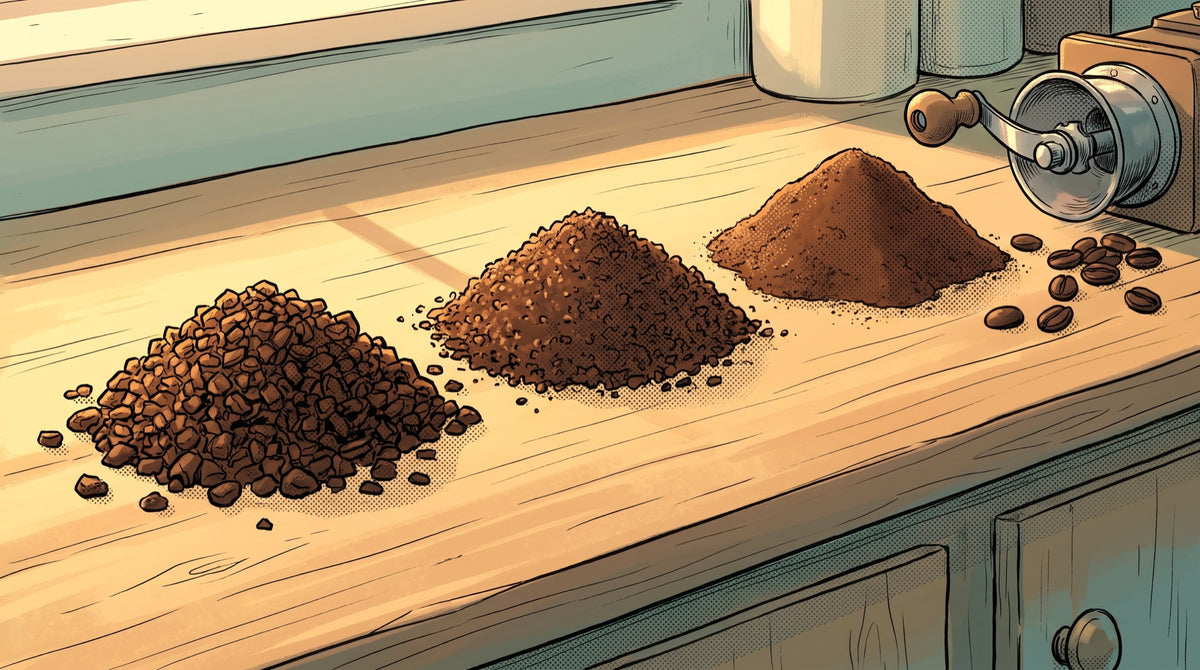
That is grind size. Coarse grounds are pebbles. Fine grounds are sand. The finer you grind, the more surface the water meets and the slower it moves, so it pulls more out of the coffee. Coarser is the opposite. Less surface, faster water, less pulled out.
Pulling flavour out of the grounds is called extraction, and here is the only bit of chemistry you need. Things come out of coffee in an order. The sharp, sour acids dissolve first. Sweetness comes next. The bitter, dry, ashy compounds come last.
Stop too early and you get the front of the queue, which is sour. Go too long and you get the back of it, which is bitter. The sweet spot is in the middle, and grind size is how you steer to it.

Sour Means Finer. Bitter Means Coarser.
This is the whole diagnostic. Learn it and you will fix nine cups in ten.
Sour, thin, a bit like lemon water. The water ran through too fast. Grind finer.
Bitter, harsh, dry on the tongue. The water hung around too long. Grind coarser.
Sour and bitter at the same time. Sounds impossible, common in espresso. That is channelling. Water found a crack in the puck and rushed through one part while over-brewing the rest. Fix your puck prep, not your grind.
Every brewer wants a different starting point, because every brewer holds water against the coffee for a different length of time. Espresso has water in contact for under thirty seconds, so it needs the finest grind to get anything out. Cold brew sits for a day, so it wants pebbles. Here is where we start on every method, straight from our brew guide.
| Brewer | Grind | Feels like | Water contact |
|---|---|---|---|
| Espresso | Fine | Caster sugar | 27 to 30 seconds |
| Moka pot | Fine | Our espresso grind | Low and slow |
| AeroPress | Medium | Regular sand | 1 to 2 minutes |
| V60 pour over | Medium | Sand | 2:45 to 3:30 |
| Filter machine | Medium | Sand | 4 to 6 minutes |
| Plunger | Coarse | Raw sugar | 4 minutes |
| Cold brew | Coarse | Raw sugar | 18 to 24 hours |
Those are starting points, not laws. Your grinder's number three is not our number three. Get the grind in the right neighbourhood, taste it, then move one notch at a time.
One notch. Not three. The most common mistake we see is someone tasting sour, cranking the grinder four clicks finer, and landing straight in bitter. Small moves, one variable, taste again.

What We Do at the Roastery
Three things you learn from grinding coffee every day that nobody prints on the side of a bag.
The grind moves as the coffee ages. A bag a few days off the roast is still full of gas and behaves unpredictably. By week three the same setting runs faster and tastes flatter, so you grind finer to chase it. The grind is not a number you set once. Cafes we supply nudge their grinders most mornings, and the good ones check again after lunch when the room has warmed up. Humid days grind differently to dry ones. That is not fussiness. It is just what coffee does.
Dark roasts come out finer at the same setting. Darker coffee is more brittle. Put Hyperdrive through your grinder on the exact number you used for People Everyday and the grounds come out finer, so it over-extracts. That is why our darker blends get a coarser grind and cooler water on the brew guide. Same grinder, same number, different coffee.
The dial beats the price tag. A cheap grinder set right makes better coffee than an expensive one set wrong. The expensive one grinds more evenly, which matters, and we covered what actually matters in a grinder. But the setting does more work than the spend.
The BOM Take
Stop buying gear to fix a cup that a two second turn of the dial would fix. Taste it. Sour, finer. Bitter, coarser. One notch. That is the whole skill, and nobody gatekeeps it because there is nothing to gatekeep.
And grind right before you brew. Ground coffee starts losing what makes it good within minutes. Whole beans, ground fresh, on a setting you have tasted your way to, will beat pre-ground from a dearer bag every morning of the week.
Try this tomorrow. Brew your usual cup and taste it black before the milk goes in. Then move your grinder one notch in the direction the cup is telling you and brew it again. Two cups, one variable. You will taste the difference.
Keep reading: Pour Over at Home · How to Dial In Espresso at Home · Why Your Kettle Matters · The Brew Guide
Want to taste what we're talking about? Check out our blends and we'll keep you sorted.
Written by Jos at Brother of Mine, specialty coffee roasters in Perth.
Keep reading
More from Ground Level.


