Dark Roast vs Light Roast: The Only Guide You Need
The single most useful thing to know when choosing coffee. Light, medium, dark. What they taste like and which BOM blend matches.
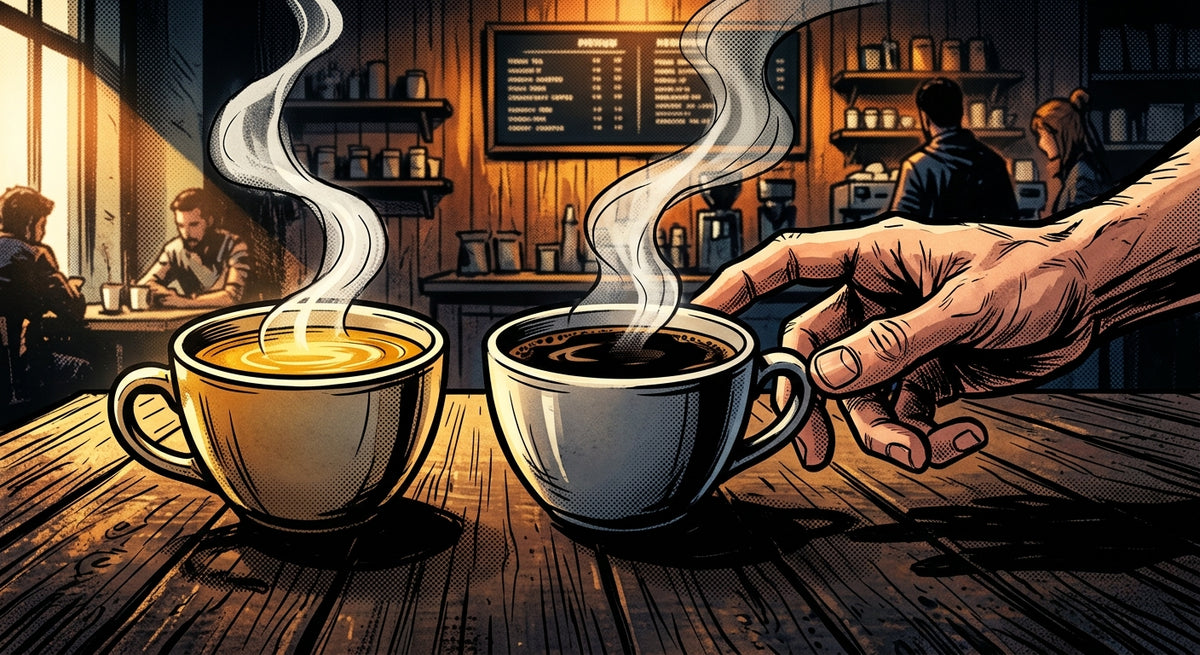
Dark roast vs light roast coffee is the argument that follows every new coffee drinker around, usually delivered by somebody very certain that one of them is objectively correct.
Neither is. They are two different products made from the same fruit, and which one belongs in your cup depends on how you brew and what you actually like drinking. Here is what changes inside the bean, and how to pick without the snobbery.
This Is the Only Thing You Need to Understand About Coffee
Forget origin. Forget process. Forget tasting notes that sound like a candle shop. If you want to know what a coffee will taste like before you buy it, there is one thing that matters more than everything else combined.
Roast level.
Light, medium, or dark. That single piece of information tells you more about how your cup will taste than the country it came from, the altitude it grew at, or whether it was"washed" or"natural." Once you understand roast level, you can walk into any cafe or scroll any website and know exactly what you're getting.
This is the guide we wish someone had given us before we started roasting.

What Actually Happens During Roasting
Green coffee beans go into a drum roaster. Heat transforms them. The longer they stay in, the darker they get. That's the simple version.
The slightly less simple version involves two key moments called"cracks." These are audible pops that happen as the bean structure changes under heat.
First crack: Around the 200°C mark the beans pop and expand, like popcorn. This is where green bean becomes drinkable coffee. Light roasts are pulled at or just after first crack.
Second crack: If you keep pushing, the beans crack again, louder and sharper, and the oils start forcing their way to the surface. This is the doorway to burnt. We never take our coffee to second crack. We respect the bean too much. Even our darkest roast is developed right up to that edge, never over it.
Medium roast: Falls between the two. Past first crack, well short of second. This is where most of the magic happens for everyday drinking.
Our roasts run somewhere between 14 and 18 minutes. The beans start at room temperature and climb to around 200°C, where first crack hits, then keep developing from there. Along the way they shed moisture and lose 10 to 20 percent of their weight, more the darker we take them. Thirty seconds either way completely transforms a cup. That's why roasting is a craft, not a factory process.
Light Roast: The Bright One
Light roast keeps more of the bean's original character. You taste where it grew. You taste the variety. You taste the processing method. The roast itself takes a back seat.
That means more acidity. More"fruity" and"floral" flavours. A lighter body. Think tea-like, juicy, sometimes tangy. If you've ever had a pourover at a specialty cafe and thought"this doesn't taste like coffee," it was probably a light roast.
The trade-off? Light roast is less forgiving. It's harder to brew well. Get the extraction wrong and it tastes sour and thin. It also doesn't play as well with milk because the delicate flavours get drowned out.
Light roast is popular in the specialty coffee world. It's not better. It's just different. And it rewards people who enjoy brewing as a hobby.
Dark Roast: The Heavy Hitter
Dark roast goes the other way. More time in the drum means the roast flavour dominates. You taste the process, not the origin. That means more body, a deeper bittersweet edge, more chocolate and smoky notes. Less acidity. Less of the fruity stuff.
Dark roast is easier to brew. It's more soluble, so water pulls flavour out quicker and more consistently. It punches through milk. It works in espresso machines that cost $300 and machines that cost $3,000.
Most coffee drinkers in Australia drink dark roast and don't even know it. That"strong coffee" you order? That's dark roast doing its thing.
Medium Roast: Where Most People Should Start
Medium roast is the sweet spot. Literally. You get some origin character, some roast character, and the balance between them creates sweetness that neither extreme can match on its own.
Less acidity than light. Less bitterness than dark. More body than light. More nuance than dark. It works black. It works with milk. It works in a plunger, an espresso machine, or an Aeropress.
This is where most of our blends live because we think it's where coffee tastes best for the most people. Not a compromise. A sweet spot.

The Comparison Table
| Light Roast | Medium Roast | Dark Roast | |
|---|---|---|---|
| Acidity | High | Balanced | Low |
| Body | Light / tea-like | Medium / smooth | Full / heavy |
| Sweetness | Fruity sweetness | Caramel sweetness | Bittersweet / chocolate |
| Bitterness | Low | Mild | High |
| Flavour character | Origin-forward (fruity, floral) | Balanced (sweet, nutty) | Roast-forward (chocolate, smoky) |
| Brewing forgiveness | Low (easy to mess up) | Medium | High (hard to mess up) |
| Best for | Black coffee, pourover | Everything (espresso, filter, plunger) | Milk drinks, espresso, cold brew |
| BOM blend | Single origins (brew black) | People Everyday | No Sleep Till Brooklyn (med-dark) / Hyperdrive (dark) |
Where BOM's Blends Sit
People Everyday is our medium roast, and our biggest seller. Always has been, and that's no accident. Sweet, balanced, smooth. Coco Pops and vanilla milkshakes. This is the one we hand to anyone who says"I just want good coffee." It works with everything.
No Sleep Till Brooklyn is medium-dark. Bolder. Richer. Jaffa cakes dipped in a dark chocolate thickshake. This is the one for people who like their coffee to hit back. Incredible in milk drinks.
Hyperdrive is dark. Full throttle. Maltesers melting in a dark chocolate nebula. Maximum body, maximum intensity. If you want your flat white to taste like coffee, not milk with a suggestion of coffee, this is it.
We don't currently sell a light roast blend. Not because light roast is bad. Because our customers told us what they wanted, and it wasn't bergamot and wet stone in their morning latte.
Myths That Need to Die
"Dark roast has more caffeine." Wrong, and it's actually backwards. Caffeine is fairly stable through roasting, but the longer a bean roasts the more it loses, and dark beans shed more of their mass too. So if anything, lighter roasts edge it. Scoop for scoop the gap is bigger again, because denser light-roast beans pack more coffee into the same spoon. Either way, nobody gets a bigger hit from a darker bag.
"Light roast tastes better." It tastes different. Not better. If you prefer bold, chocolatey coffee with milk, a light roast Ethiopian will actively disappoint you. Taste is personal. Stop letting the internet tell you what to like.
"Dark roast is burnt." Bad dark roast is burnt. Good dark roast is developed. There's a massive difference between a roaster who built the flavour with patience and one who pushed it past second crack and forgot to check the timer. We stop ours before second crack, every time.
"Dark roast is bitter." Usually that's not the roast, it's the brew. Harsh, bitter flavours most often come from over-extraction, water pulling too much out of the grounds. Grind size, dose and brew time matter as much as the bean. Dial those in and even a bold roast tastes clean and sweet. Our brew guide walks you through it.
"Real coffee people drink light roast." Real coffee people drink what they enjoy. We roast coffee for a living and most of us reach for medium. Gatekeeping roast levels is peak internet nonsense.
Our Honest Take
Start with medium. That's our advice to anyone who asks. People Everyday exists for exactly this reason. It's the starting point that works for everyone.
From there, let your preference guide you. If you want more punch, especially in milk drinks, go darker. Try No Sleep or Hyperdrive. If you want to explore lighter, more delicate flavours, grab a single origin and brew it black. A pourover or plunger will let those lighter notes shine.
But don't let anyone tell you there's a"right" answer. There isn't. There's only what tastes good to you, made well. If you need help dialling in your espresso, we've got you. If the whole tasting notes thing still feels like a foreign language, we wrote about that too.
Drink what you like. Make it well. That's the whole game.
Not sure which roast level suits you? Take our interactive blend quiz and we'll point you straight to the right one. Or grab a bag of People Everyday and start there. Want to taste the full range? Try all three blends side by side and you'll know your preference in one cup. And when you find your blend, lock in a subscription and save 20% on every bag.
Keep Reading
- How to Dial In Espresso. The exact recipes we use for each blend, including how roast level changes the approach.
- Why Tasting Notes Don't Help You. If flavour descriptions confuse you more than help, read this.
- What Single Origin Actually Means. Origin matters, but not the way most people think.
- Brew Guide. Our full brewing reference for every method.
Written by Jos at Brother of Mine, specialty coffee roasters in Perth.
Keep reading
More from Ground Level.


