How to Make Cold Brew at Home
Cold brew is not iced coffee. Here's the recipe we use at the roastery. A jar, a strainer, 18 hours. Smooth, sweet, zero bitterness.
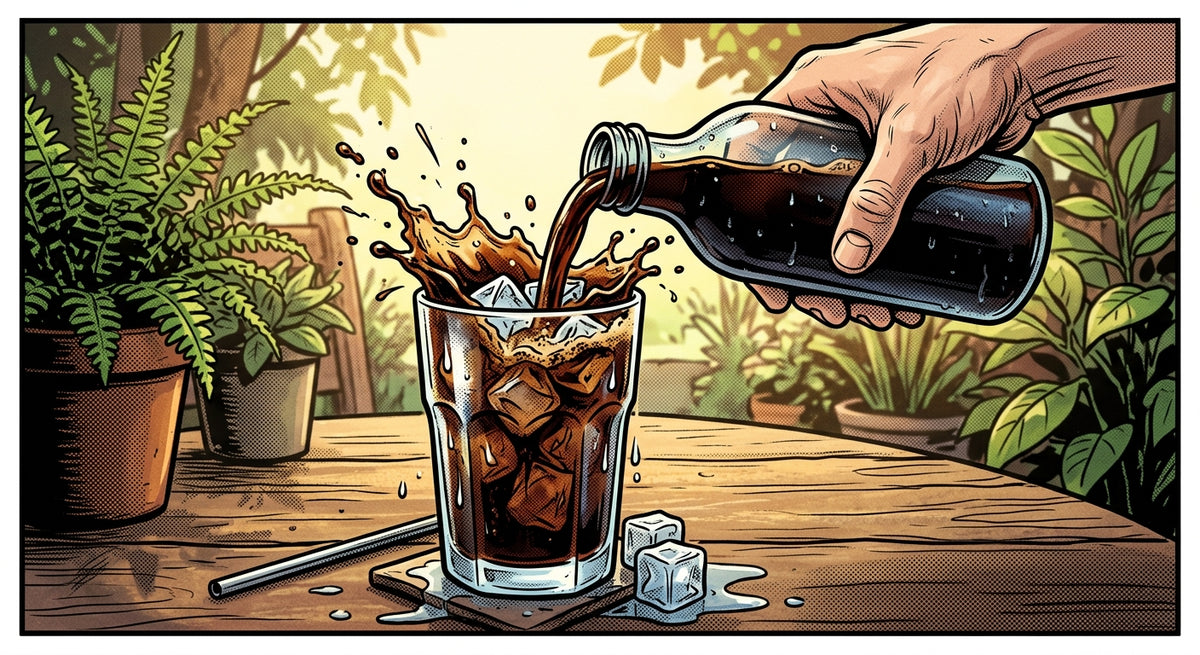
How to make cold brew coffee at home is genuinely one of the easiest things in coffee, which is exactly why it irritates us that it gets dressed up as complicated.
No machine. No skill. Coffee, water, time and something to put it in. Here is the recipe we actually use, and the two mistakes that make most home cold brew taste like dirty water.
Cold Brew Is Not Iced Coffee
Let's kill this one right now because it comes up every single summer. Cold brew and iced coffee are not the same thing. Not even close.
Iced coffee is hot-brewed coffee poured over ice. You make it normally, you cool it down. It's fine. But it tastes like diluted hot coffee because that's literally what it is. The ice melts, the coffee weakens, and you're left with a watery cup that used to be good.
Cold brew is a completely different process. You steep coarse ground coffee in cold or room temperature water for 18 to 24 hours. No heat ever touches it. The extraction happens slowly, over time, and the result is something that tastes nothing like hot coffee that got cold.
Less acidity. More sweetness. A smoother, thicker body. It's a different drink. Once you've had proper cold brew, going back to iced coffee feels like a downgrade.
Why It Tastes Different
Heat is the engine of coffee extraction. When you pour hot water over grounds, it rips everything out fast. Acids, oils, sugars, bitter compounds. All of it, in four minutes.
Cold water works differently. It's patient. It pulls the sugars and chocolate notes out slowly, but it leaves most of the harsh acids and bitter compounds behind. They need heat to extract properly, and they never get it.
That's why cold brew tastes sweeter and smoother than any other method. It's not a trick. It's chemistry. You're literally extracting a different set of flavour compounds.

The Recipe
This is what we use at the roastery. Same recipe we give to cafes that do cold brew on tap. It makes a concentrate, not a ready-to-drink coffee. We'll get to dilution in a second.
| BOM Cold Brew Recipe | |
|---|---|
| Coffee | 60-70g per litre of water |
| Grind | Coarse (like raw sugar) |
| Water temp | Cold or room temperature |
| Steep time | 18-24 hours in the fridge |
| Strain | Fine mesh sieve or cloth |
| Dilution | 1:1 with water or milk |
| Shelf life | Up to 2 weeks (sealed, in fridge) |
Batch Size Guide
| Batch | Coffee | Water | Makes (diluted) |
|---|---|---|---|
| Small | 35g | 500ml | ~4 cups |
| Medium | 65g | 1 litre | ~8 cups |
| Large | 130g | 2 litres | ~16 cups |

Step by Step
1. Grind your coffee coarse. Same grind you'd use for a plunger. Think raw sugar, not sand. If it's too fine, you'll end up with a muddy, over-extracted concentrate that tastes harsh even after diluting. Coarse is key.
2. Combine coffee and water in a jar. Any large jar, jug, or container works. Glass is ideal but plastic is fine. Stir it a few times to make sure all the grounds are wet. No dry clumps hiding at the top.
3. Cover it and put it in the fridge. Lid on, cling wrap, whatever you've got. You just want to keep fridge smells out. Set it and forget it.
4. Wait 18 to 24 hours. This is the hard part. Not because it's complicated. Because you have to be patient. 18 hours is the minimum for proper extraction. 24 hours is the sweet spot. Beyond 24 and it starts getting woody and dull.
5. Strain it. Pour the whole thing through a fine mesh sieve into a clean jar or bottle. If you want it extra clean, line the sieve with a piece of muslin cloth or even a clean tea towel. Double straining through cloth gives you a silky smooth concentrate with zero grit.
6. Dilute and drink. What you've got now is a concentrate. It's strong. Don't drink it straight unless you want your heart rate in triple digits. Mix it 1:1 with cold water, milk, or oat milk. Pour over ice. Done.
What to Brew With
Cold brew loves darker roasts. The long steep brings out chocolate, caramel, and nutty sweetness from darker beans. Lighter roasts can taste thin and one-dimensional when cold-brewed because the fruity, floral notes that shine in pour-over don't punch through as well in cold water.
Here's what we recommend from our range.
No Sleep Till Brooklyn
This is our pick for cold brew. Jaffa cakes and dark chocolate, thick and bold. NSB was built to hit hard and it does exactly that in cold brew. The chocolate notes become almost syrupy. Mix it 1:1 with milk and it tastes like a chocolate milkshake that also happens to wake you up. Dangerously drinkable.
Hyperdrive
Full throttle. Maltesers melting in a dark chocolate nebula. Hyperdrive is our darkest blend and cold brew tames it beautifully. All the richness and power, none of the harsh edge. This is the one if you drink your coffee black and want the concentrate to stand up on its own.
People Everyday
PED works as cold brew but it's a different vibe. Lighter, smoother, more vanilla and cocoa pops. It won't have the same punch as NSB or Hyperdrive. If you like your cold brew mellow and easy-drinking with milk, PED delivers. Just know it's the gentle option.
Equipment: A Jar and a Strainer
That's it. That's the equipment list.
You don't need a cold brew maker. You don't need a Toddy system. You don't need a specialty filter tower that looks like a chemistry set. A large mason jar and a fine mesh strainer from the kitchen drawer. Total cost if you're buying from scratch: maybe $15.
If you want to get slightly fancy, grab a piece of muslin cloth for straining. It makes the concentrate cleaner. But a sieve works fine. We've made cold brew in a saucepan with cling wrap on top. It doesn't care about your equipment. It cares about time and ratio.
That's what makes cold brew the most accessible brew method going. Cheaper than a plunger setup. No kettle needed. No timer. No technique. Just patience.
Shelf Life and Storage
Cold brew concentrate keeps for up to two weeks in the fridge in a sealed container. That's a massive advantage over hot-brewed coffee, which goes stale in hours.
Make a big batch on Sunday night. You've got cold brew for the whole week. Maybe two weeks if you're not smashing through it. Just keep it sealed. An old bottle with a lid, a jar, a flip-top bottle. Anything that closes tight.
Once you dilute it, drink it that day. Diluted cold brew goes flat fast. Keep the concentrate strong and mix each cup fresh.
And store your beans properly before they even get to the jar. Fresh beans in, fresh cold brew out. No method fixes stale coffee.
Pro Tips from the Roastery
Room temp vs fridge steep. Room temperature water extracts faster. You can cut steep time to 12 to 16 hours at room temp. Fridge steep takes longer (18 to 24) but produces a slightly cleaner, brighter result. We prefer fridge. It's more forgiving if you forget about it for a few extra hours.
Don't skip the stir. Give it a good stir when you combine the grounds and water. Dry pockets mean uneven extraction. Every ground needs to be wet and happy from the start.
Single origin cold brew. We sometimes do this at the roastery for cupping experiments and it gets wild. Ethiopia cold brew is like iced tea with blueberry notes. Completely different to anything you'd expect from coffee. It's not for everyone but if you're curious, it's worth trying once. Grab a bag of our Ethiopian single origin and see what happens.
Concentrate ratio. If 1:1 dilution is too strong or too weak, adjust it. Start at 1:1 and add more water or more concentrate to taste. There's no wrong answer. It's your coffee.
Get Started
Cold brew is the easiest method we recommend. No skill required. No equipment to buy. Just coffee, water, time, and a jar.
Make a batch tonight. Tomorrow afternoon, you'll understand why people get obsessed with this stuff. And you'll never buy bottled cold brew from the servo again.
Grab the beans. Start a batch tonight.
Shop our signature blends. we recommend No Sleep Till Brooklyn or Hyperdrive for cold brew. Roasted in Perth, shipped fast, available in coarse grind. Fresh beans. Cold water. 24 hours. That's it.
Keep Reading
- The Plunger Is Underrated. The simplest hot brew method. Same coarse grind, totally different result.
- How to Store Coffee So It Actually Stays Fresh. Your beans are only as good as how you store them.
- The $30 Fix That Changed Our Coffee. The cheapest upgrade that makes the biggest difference.
- Brew Guide. Our full brewing reference for every method.
Written by Jos at Brother of Mine, specialty coffee roasters in Perth.
Keep reading
More from Ground Level.


