Put the Price Up. Don't Touch the Coffee.
Milk is up, green coffee is up, and every cafe is choosing between a cheaper bean and a higher price. Run the numbers and it is not close.
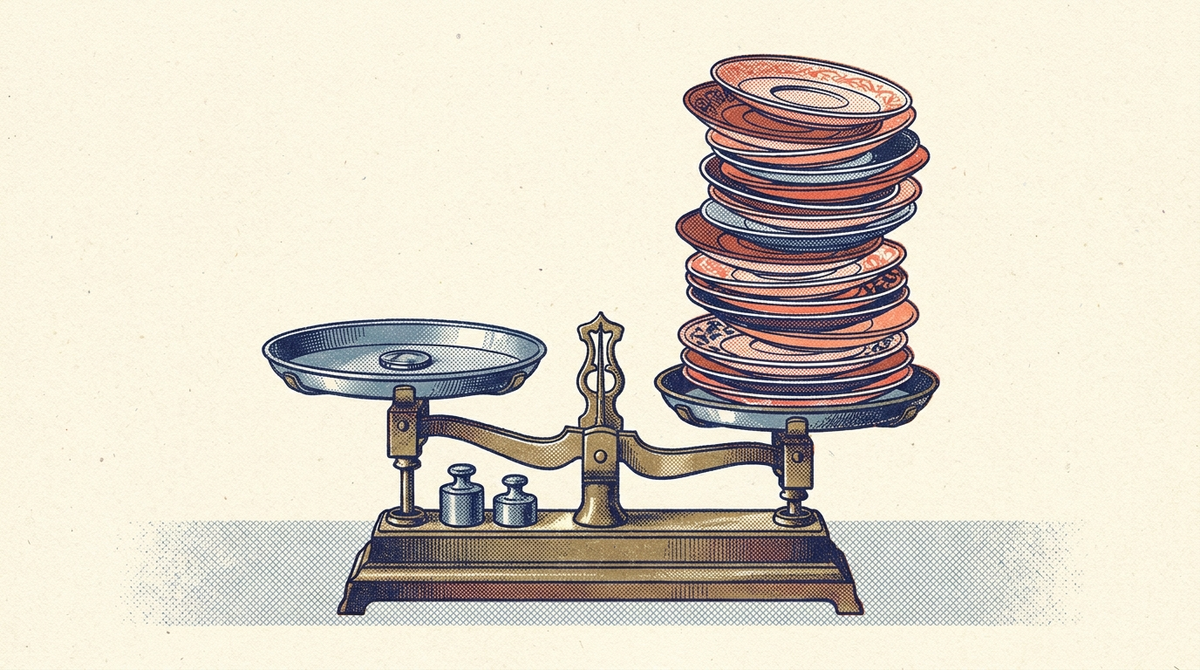
Milk is up. Green coffee is up. Rent did not go down. So you are standing at the same fork every operator we supply is standing at right now: hold the price and quietly buy a cheaper bean, or put the price up and keep serving what you serve.
Almost everyone reaches for the bean. It feels like the safe one. Nobody has to be told, nothing goes on a sign, no regular gets upset.
It is the most expensive saving you will ever make.

The Maths Nobody Actually Does
Run it properly, because the numbers are not close.
Say you pour 200 coffees a day. On a 20g double, a kilo gives you about 50 drinks, so a $40 kilo puts roughly 80 cents of coffee in the cup.
Now drop to a bean $5 a kilo cheaper. You save 10 cents a cup. At 200 a day that is $20, about $140 a week, near enough to $7,000 a year. Real money, and it arrives with no conversation.
Now put 50 cents on the cup instead. Same 200 drinks. That is $100 a day, $700 a week, somewhere around $36,000 a year.
Five times the money, from a decision that takes one afternoon. And the cheaper bean has a second bill attached that the spreadsheet never shows you.
There is a third option people take without ever deciding on it, which is to absorb the increase and carry on. That is a real choice and sometimes the right one for a season. Just be honest that it is a choice. If your costs climbed 8% and you held every price, you did not stay level. You took a pay cut and called it loyalty to your customers.
The reason this one is so common is that it requires no action, no sign and no awkward moment. It is the only option on the list you can pick by doing nothing at all, which is exactly why it needs the most scrutiny.

The Cheaper Bean Has a Bill You Cannot See
Your regulars will not send you an email about it. That is the problem.
They will not taste it on day one either. They taste it in week three, when the flat white they have had every morning for two years is just slightly flatter, and they cannot tell you why, and they start getting one at the place near the office instead.
You will never attribute that to the bean. It shows up as a slow, unexplained sag in morning numbers, three months later, with no single day you can point at.
Losing 8 regulars who came 4 times a week at $5 a cup is about $8,300 a year gone. That is your entire $7,000 saving, plus interest, and you have made your coffee worse to get it.
There is also the part nobody says out loud. You can put a price back down. Getting a regular to trust your coffee again after they have quietly decided it went downhill is a much longer job.

Price Is a Feeling Before It Is a Number
Rory Sutherland spent a career at Ogilvy watching people behave in ways that make no sense on a spreadsheet and perfect sense in a human head. His argument is that we do not judge value in absolute terms. We judge it against context, and context is something you control.
The same coffee is a different product depending on what surrounds it. In a chipped cup handed over without eye contact, $5.50 feels steep. In a warm cup, from someone who knows your name, in a room that looks like somebody cares, $5.50 barely registers.
That is not a trick. It is the actual experience being better, and people are correctly paying more for a better experience.
Which is why the two moves belong together. Do not raise the price and change nothing. Raise the price and give people one visible reason to feel good about it in the same week. Better cups. The good milk. A second person on the machine at 8am so the queue moves. Learn ten more names.
The rise gets absorbed into a general sense that the place is on the up. Cut the bean instead and you get the reverse feeling, for less money.

The Exercise: Put It Up, and Say Why
Pick the number this week. For most venues we deal with, 50 cents on espresso-based drinks is the move. Not 20 cents, which you will have to do again in six months and annoy everyone twice. Not a dollar, which invites a conversation you do not want.
Then tell people. One short sign, at the till, in your own words. Something like: our costs went up this year, we would rather put the price up 50 cents than put worse coffee in your cup. That is it. No apology, no essay, no blaming suppliers.
Tell your team before you tell the room. They are the ones who cop the first comment, usually at 7:15am with a queue behind it, and nothing undermines a price rise faster than a barista who shrugs and says they do not know, management just did it. Give them one sentence they actually believe and they will deliver it better than any sign.
Two things happen when you do it that way. The people who were going to notice hear it from you first, which is worth more than the 50 cents. And you find out something useful, because the customer who walks over 50 cents was never really yours.
The operators who come out of a squeeze in better shape are almost never the ones who found the cheapest inputs. They are the ones who stayed worth paying for.
Inspired by Alchemy by Rory Sutherland. If this hit home, the book goes deeper.
Keep reading: Pay Yourself First. The Cafe Eats Last. · Nobody Lines Up for Good Coffee at a Fair Price
We roast for cafes across Perth. If you want a wholesale partner who thinks about your business the way we write about it, start a conversation.
Keep reading
More from First Light.