Your Team Isn't the Problem. You Are.
Jocko Willink's Extreme Ownership, applied to a cafe. Why swapping the leader fixes the team, and how to tell ownership apart from blame.
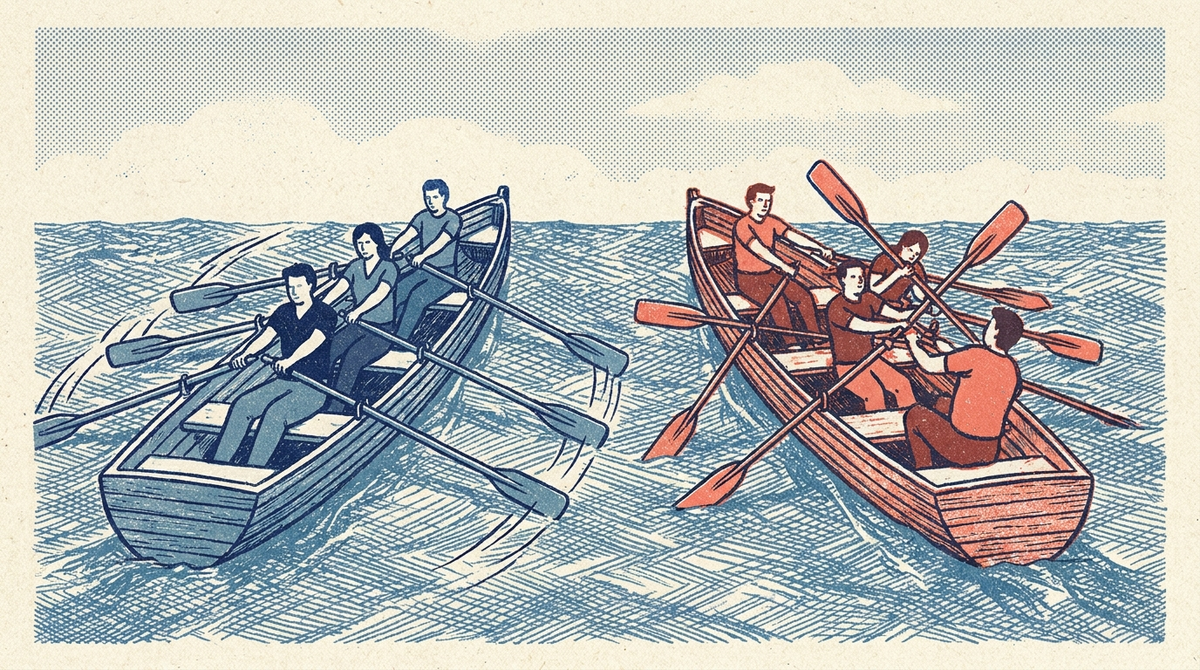
Swap the worst team in your business with the best one, leaders included, and within a month the worst team is winning. Same people. Same job. Different person in charge.
Jocko Willink watched exactly that happen during Navy SEAL training, where boat crews race each other in the surf. One crew always came last. One always came first. So the instructors swapped the two leaders and left everyone else where they were.
The last-place crew started winning almost immediately. The first-place crew stayed near the top, because good people keep good habits for a while. But the story was already told. Nothing changed except who was leading.
His line for it is uncomfortable and hard to argue with. There are no bad teams, only bad leaders.
What the new leader actually did was not complicated. He refused to accept that last place was just how this crew went, and he got them believing the next race was winnable. The standard moved, so the result moved. Whatever a leader is willing to walk past becomes the real standard, no matter what is written on the wall.

The Barista Is Not the Problem
Every cafe owner has a version of this. The new kid who is slow. The closer who cuts corners. The Saturday crew who cannot keep up while the Sunday crew cruises.
The instinct is to sort the people. Have a word, write a roster around the problem, quietly look for a replacement.
Try the other question first. What did they actually get from you? Did anyone show them the standard, or did they get shown the buttons and left to it? Is the milk fault a person problem, or has nobody in the building ever tasted the same drink made correctly next to theirs?
Most underperformance we see in venues is not attitude. It is a standard that was never made explicit, taught by someone who was themselves never taught it. That is not a staffing problem. That is upstream of the staff.
We see this from the outside more clearly than an owner can from the inside. We deliver to a lot of venues, and the ones with a reputation for great coffee are almost never the ones with the best machines. They are the ones where somebody decided what good tastes like, wrote it down, and taught it to every new person in their first week. The gear up and down the street is nearly identical. The teaching is not.

Ownership Is Not the Same as Blame
This is where people hear "it's your fault" and switch off. That is not the point at all.
Blame looks backwards and it is about who pays. Ownership looks forwards and it is about who can fix it. They feel similar and they lead to completely different mornings.
The supplier was late. The POS went down. Someone called in sick at 5am. None of that is your fault, and all of it is still yours to solve, because you are the only person in the building who can change what happens next time. A late supplier twice is bad luck. A late supplier every month is a supplier you have chosen to keep.
The tell is in the language. Listen to yourself for a week. Every sentence that starts with "they" or "you can't get staff these days" is a sentence where the fix has been handed to somebody who is not in the room.
Try it on your roster. "They keep calling in sick on Saturdays" is a sentence with no next step in it. "Saturday is the shift nobody wants and I have never once asked why" has about four.
None of this means carrying everything yourself. Willink's other half of the idea is that ownership has to run all the way down. Your team cannot own a result they were never given the room to control. Tell someone they are responsible for the coffee, then override every call they make, and you have not delegated anything. You have just moved the blame closer to the machine.

The Ones Nobody Wants to Own
Three that come up constantly, and where the ownership version actually sits.
"Our regulars stopped coming." Not the economy. When did you last change anything, and does anybody working Saturday know a regular's name? We wrote about why good service alone is forgettable, and this is the same muscle.
"The kitchen and the floor are always at war." Two teams optimising for different things because nobody ever said out loud which one wins during a rush. That is not a personality clash. That is an unmade decision.
"We can't get good staff." Everyone in your suburb is fishing in the same pond and some of them are full. The difference is almost never the pond.

The Exercise: Ask Why Five Times, Pointing Inward
Take the thing that annoyed you most last week. Ask why it happened, then ask why about the answer, five times over. The rule is that no answer is allowed to stop at another person's name.
A real one. The 8am rush fell apart. Why? The milk ran out. Why? Nobody checked the fridge. Why? Checking the fridge is not on the open list. Why? Nobody has updated the open list since we changed suppliers. Why? Because that is my job and I have not done it in a year.
Five questions and it stopped being a staff problem. It became a laminated sheet you can fix on Tuesday for nothing.
Do it once, honestly, and you will find the same thing we do. Almost every recurring problem in a small business terminates in a decision the owner has not made yet. That is genuinely good news, because unmade decisions are the cheapest thing in the world to change.
Inspired by Extreme Ownership by Jocko Willink and Leif Babin. If this hit home, the book goes deeper.
Keep reading: You're an Expert. That's the Problem. · Six Reasons People Say Yes. Your Cafe Uses One.
We roast for cafes across Perth. If you want a wholesale partner who thinks about your business the way we write about it, start a conversation.
Keep reading
More from First Light.