The Good Week That Is Hiding a Bad Call
Annie Duke on resulting: why a good week can hide a bad call, a bad week can hide a good one, and how a cafe owner tells the two apart.
With 26 seconds left in the 2015 Super Bowl, the Seattle Seahawks were one yard from winning it. Everyone in the stadium expected a handoff to one of the best running backs in the league. The coach called a pass. It was intercepted, and Pete Carroll spent the next year being told he had made the worst call in the history of the game.
Here is the part nobody said on the night. A pass from that spot gets intercepted fewer than two times in a hundred. The odds were fine. The play was defensible. The ending was terrible. And every commentator graded the decision by the ending.
Annie Duke, who played poker for a living for nearly twenty years, opens her book with that play because she watched people do the same thing at the table every night. Win the hand and you played it well. Lose the hand and you played it badly. She has a word for it. Resulting.
You do it too. Every Monday, when you look at last week's takings.

Resulting: When the Ending Grades the Decision
Resulting is judging the quality of a decision by the quality of its outcome. It feels like common sense. It is actually the most expensive habit in your business, because it teaches you the wrong lessons and you never notice.
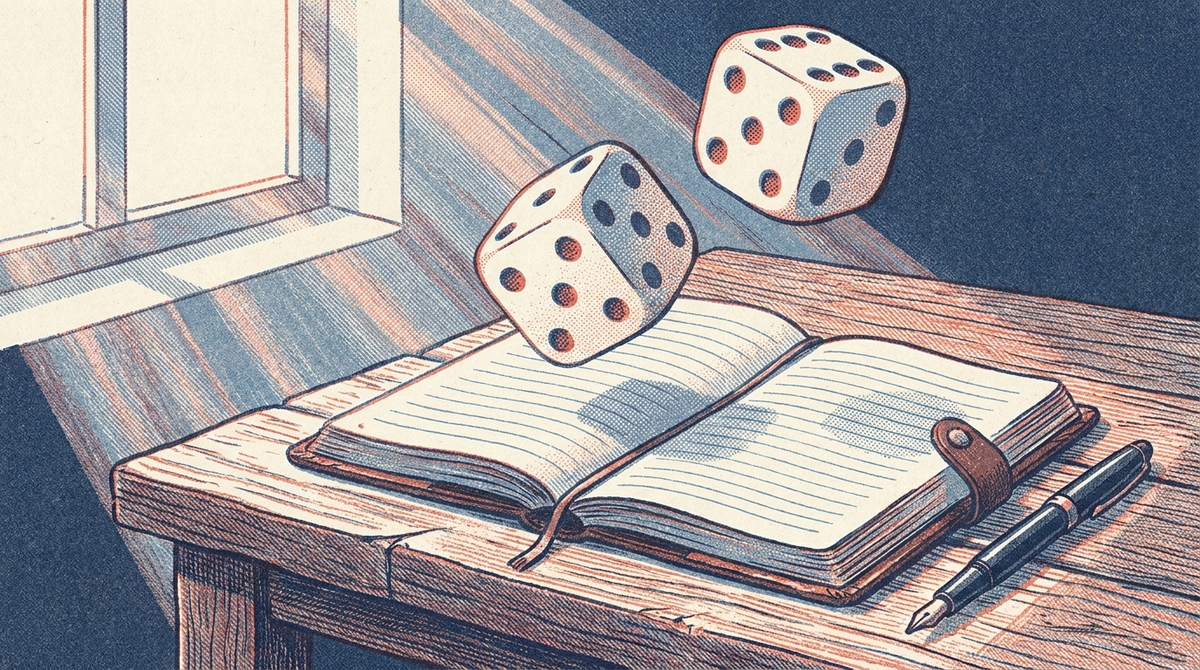
Duke's point is that almost every decision you make is a bet. You do not know what the weather will do, whether the new hire will stick, whether the office account will renew. You are choosing under uncertainty, with the information you have, and then the world rolls the dice.
That means two things are always in play. The decision, which you control. And luck, which you do not. Resulting collapses them into one. It gives you credit for luck and blames you for it, and either way you learn nothing true.
Poker players learn this fast because they lose with good hands hundreds of times a year. Cafe owners learn it slowly, because you only get about fifty weeks a year to look at, and every one of them arrives wrapped in a dozen things you did not choose.

Four Boxes. You Only Ever Look in Two.
Draw a square and cut it into four. Across the top: good decision, bad decision. Down the side: good outcome, bad outcome.
Most owners live in the two obvious boxes. Good decision, good outcome, take the credit. Bad decision, bad outcome, learn the lesson. Fair enough.
The other two boxes are where the money leaks.
Bad decision, good outcome. You dropped your prices for a festival weekend, the sun came out, and you did record numbers. The price cut gets the credit. The sun did the work. Next festival you cut again, it rains, and you lose twice.
Good decision, bad outcome. You put your coffee price up by forty cents, the same week a competitor opened across the road. Takings dipped. The price rise gets the blame. You quietly reverse it and never try again, when the rise was right and the competitor was the dice.
Duke's rule is that you cannot sort a result into a box until you have separated what you decided from what you got. That takes about five minutes, and almost nobody spends them.

What This Looks Like on Your Floor
Here are the decisions we watch cafes grade by the ending, every week.
The Sunday roster. You ran one fewer on the floor, it was quiet, and it worked. So you run lean every Sunday until the one where a bus tour walks in, and then the roster gets the blame. The roster was a bet on quiet. Grade the bet, not the bus.
The supplier switch. You moved suppliers to save eight per cent, the first delivery was late, and you moved back. One late delivery is an outcome. Whether the new supplier is reliable is a question you never gave enough deliveries to answer.
The new menu item. It sold thirty in the first week and you called it a winner. Or it sold six and you pulled it. Both are one week of data, in one month, in one kind of weather. Neither is a verdict.
The hire. The person who interviewed well and quit in five weeks does not mean your interview was wrong. The person who interviewed badly and stayed three years does not mean it was right. One hire is one hand of cards.
The price rise. This is the big one. We have written about why the price should go up before the coffee changes. The reason owners will not do it is resulting. They tried it once, the month was soft for six other reasons, and the price rise wore the blame for all of them.
Notice the pattern. In every case the outcome arrived fast and loud, and the decision quality was quiet and slow. So the loud thing wins.

The Exercise: Wanna Bet?
Duke has a habit she borrowed from the poker table. When someone states something as fact, a good player asks: wanna bet? It forces the speaker to put a number on how sure they are. Not certain. Seventy per cent. Sixty. Once you have a number, you have something to check against later, and you have stopped pretending you know the future.
So this week, before the next decision you make that costs real money, write three lines in a notebook.
One. What you are deciding and why. Two. How sure you are it will work, as a percentage. Three. What has to be true for it to work, and what could wreck it that you do not control.
Then, when the result comes in, do not look at the takings first. Open the notebook. Ask whether the reasoning held up given what you knew that day. Only then look at what you got, and sort it into its box.
Do that for a month and something uncomfortable happens. You find a couple of decisions you have been proud of that were luck. You find one or two you abandoned that were right. And you find that your confidence numbers were too high almost every time, which is the most useful thing a cafe owner can learn about themselves.
A good week is not proof. A bad week is not a verdict. The decision is the only part you get to keep.
Further reading: Thinking in Bets by Annie Duke
Inspired by Thinking in Bets by Annie Duke. If this hit home, the book goes deeper.
Keep reading: The Dumb Tax · Put the Price Up. Don't Touch the Coffee.
If you want a Perth coffee roaster who thinks about your business the way we write about it, let's talk.
Keep reading
More from First Light.