The Dumb Tax: Why Your Worst Business Decisions Cost Way More Than You Think
The hire you rushed. The lease you signed emotionally. The equipment you bought because it was on sale. How to calculate the real cost of reactive decision
Most business mistakes don't feel like mistakes when you make them. They feel like solutions.
That's the trap.
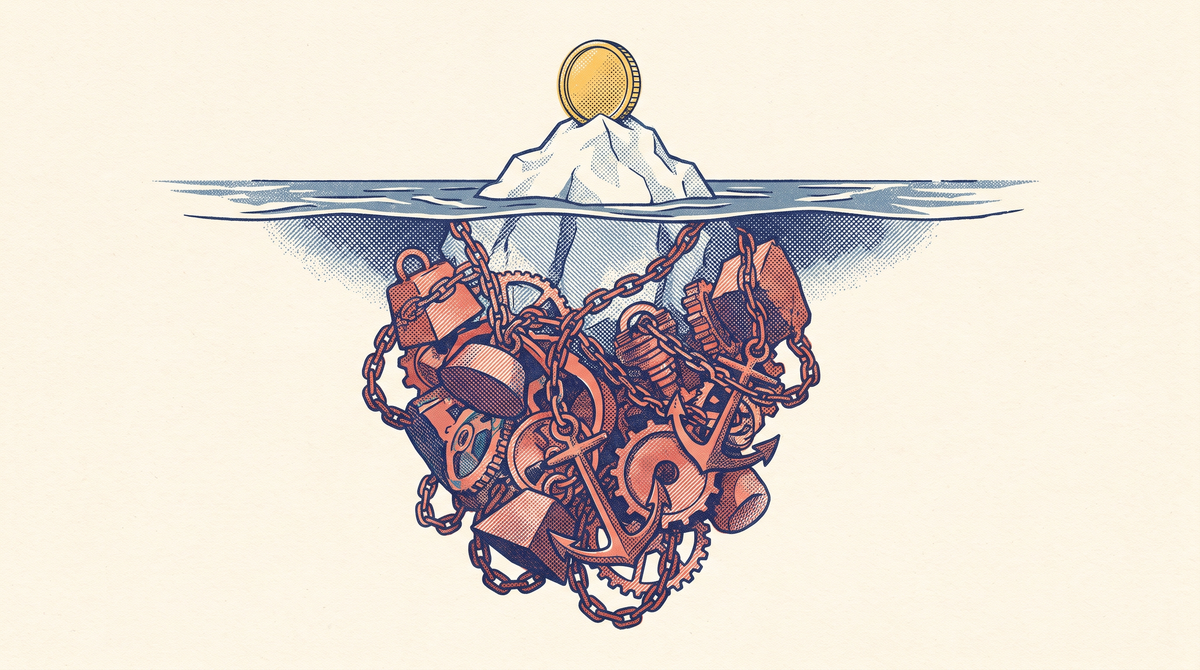
Keith Cunningham has a name for the money you lose when you act fast, think slow, and let urgency or emotion drive the wheel. He calls it the Dumb Tax. And if you run a cafe or small business, you've paid it. Probably more than once. Probably more than you know.
The Dumb Tax isn't just the money you lost. It's the money you never made because of the decision. It's the time you spent cleaning up the mess. It's the opportunity cost of being stuck with the wrong hire, the wrong lease, the wrong piece of equipment. When you add all of that up, most "small" bad decisions turn out to be enormous.
Here's how to start catching them before you pay.
The Framework: First-Order vs Second-Order Consequences
Most of us make decisions by looking one step ahead. The hire solves the roster problem. The lease gets you the location. The machine was 30% off so you bought it.
That's first-order thinking. It's fast, it feels logical, and it's how most bad decisions get made.
Cunningham's antidote is second-order thinking. Before you act, you ask: and then what? What happens after the first thing happens? What does that decision look like in 12 months, not 12 days?
The Dumb Tax lives in the gap between what you thought would happen and what actually did.

The Rushed Hire
You're slammed. You've been covering shifts yourself for three weeks. You're exhausted and you just need someone in the building.
So you hire the first person who shows up on time and seems decent. First-order thinking: the roster is covered. Problem solved.
But then what?
The new hire is slow to train. They make errors that cost you product. Customers notice the inconsistency. Your best staff member gets frustrated carrying the load and starts looking elsewhere. Three months later you're managing a performance issue, retraining, or starting the whole hiring process again, except now you're doing it while also dealing with the fallout from the first bad hire.
The Dumb Tax on a rushed hire isn't just the wages you paid. It's the product waste, the customer experience dip, the culture damage, the time you spent managing instead of building. A bad hire at $25 an hour for 20 hours a week over three months is $6,500 in wages. But the real cost, when you factor in everything else, can easily be three to five times that.
The fix isn't to hire slower for the sake of it. It's to ask "and then what?" before you sign anyone on. What does this person look like in six months? What's the training burden? What happens if it doesn't work out?
Thirty minutes of thinking time before the hire beats three months of management pain after it.

The Emotional Lease
You found the perfect spot. Great foot traffic, beautiful bones, the right vibe. You can picture exactly what it looks like. You're excited.
And because you're excited, you sign.
First-order: you get the location. Second-order: you're locked into a 5-year lease at $8,000 a month for a space that needs $120,000 in fitout, in a market you haven't actually stress-tested, with a landlord who won't budge on outgoings.
Excitement is not a due diligence process.
The Dumb Tax on an emotional lease can be existential. We've seen operators locked into spaces they outgrew in year one, or spaces that never hit the foot traffic numbers they assumed, or spaces where the rent-to-revenue ratio made profitability almost impossible from day one.
Before you sign anything with a term longer than 12 months, run the numbers cold. What does this space need to turn over per week just to break even? Is that number realistic for this location, this market, this concept? Get someone who isn't emotionally invested to pressure-test your assumptions.
The question isn't "can I make this work?" It's "what has to be true for this to work, and how confident am I that those things are actually true?"

The Sale Price Equipment Trap
The commercial dishwasher was $4,000 off. The espresso machine was ex-demo and half price. The cool display fridge was going cheap because the previous owner was closing down.
All of that sounds smart. Some of it might even be smart.
But here's the second-order question: what does this equipment cost to run, maintain, and repair? And what happens to your operation if it goes down?
We know operators who bought cheap equipment and spent more on service calls in 18 months than the discount they got upfront. We know cafes that bought the wrong capacity machine because it was on sale, then had to replace it 18 months later when volume grew. The discount was real. The savings weren't.
The Dumb Tax on equipment isn't always obvious because it's spread out over time. But it's there. Before you buy anything significant because it's cheap, ask: what is the total cost of ownership over three years? Factor in energy, maintenance, consumables, and downtime. That's the real number.

How to Think Before You Act
Cunningham's prescription is simple and uncomfortable. He calls it "thinking time." Scheduled, protected, deliberate time where you sit with a problem before you react to it.
Most business owners are so deep in the day-to-day that every decision gets made in the gap between two other things. On the way to a supplier call. Between the breakfast rush and the lunch prep. That's exactly when the Dumb Tax gets paid.
The antidote is a question, not a meeting. Before any significant decision, write down the answers to these three things:
What am I assuming has to be true for this to work?
What does this look like in 12 months if I'm wrong?
What's the cost of waiting 48 hours to decide?
Most decisions that feel urgent aren't. The urgency is a feeling, not a fact. And most Dumb Tax moments happen because the urgency feeling won the argument.
The Weekly Tax Audit
Here's your one action for this week.
Pick one decision you've made in the last 12 months that didn't go the way you expected. A hire, a supplier change, a marketing spend, a piece of equipment, a lease clause you didn't read carefully enough.
Now calculate the real cost. Not just the direct cost. The time cost. The opportunity cost. The downstream effects on your team, your customers, your cashflow.
Write the number down.
Then ask: what was I thinking when I made that decision? What was I not thinking about? What second-order consequence did I miss?
You're not doing this to beat yourself up. You're doing it to calibrate. Because the Dumb Tax doesn't stop until you can see clearly how you paid it.
The goal isn't to make perfect decisions. It's to make fewer reactive ones. To slow down the moments that feel fast and urgent, and ask one more question before you act.
Thirty minutes of thinking time is cheap. The Dumb Tax is not.
Further reading: The Road Less Stupid by Keith Cunningham
If you want a Perth coffee roaster who thinks about your business the way we write about it, let's talk.
Keep reading
More from First Light.